
The balance between our desires and our responsibilities to others is one of the toughest struggles we face in our work and personal lives. It’s difficult because what is best for us can sometimes conflict with what is best for others. At a minimum, questions of resources (who receives what) and time (who takes precedence) will create friction between us and those around us.
Another factor contributing to this struggle is our cultural and social bias against anything labeled “selfish.” However, the truth is this: we cannot be our best if we do not look after ourselves and our interests. How, then, do we find the balance between what is best for ourselves and what is best for our team, community, or family?
First, we must remember that selfishness and selflessness cannot be judged without context; we should act according to what the situation requires. For example, let’s take the safety briefing before every commercial airline flight. After demonstrating how to fasten and unfasten a seatbelt resembling one from a 1963 Ford Falcon and instructing us on when and how to inflate our life vest, flight attendants show us how to position a yellow cup over our nose and mouth “in the unlikely event we lose cabin pressure.” But that’s not all.

They continue by telling us that if traveling with someone who needs assistance, “put your mask on first before helping them.” Most people understand that this is done to help the other person, but they confuse it with an act of selfless service. It is not selfless; it is the rationale for doing something inherently selfish—taking care of yourself first. This is the best example to illustrate that context matters before we label selfless as “good” and selfish as “bad.”
Second, before we act, we should ask ourselves a few questions to ensure we are doing what is best for ourselves and beneficial for others.
“What will I do with this thing I want for myself?” When we set out to acquire a new skill, a material object, or a promotion, we must understand our plan for it. How will we put it to use? Knowing the answer to this question will help you move beyond merely wanting something for the sake of having it and enable you to use it for yourself and others.
“Does it benefit anyone else?” Once you know your plan, how can you identify the greatest benefit for the people in your life or your team? Asking and answering this question will help ensure that your choices are “wise selfish” rather than “foolish selfish,” as the Dalai Lama would say (see page 70 of my book, Leadership in Balance). In both the short and long term, taking care of your interests can and should be rooted in love and compassion for yourself and your communities.
“Does it make me a better person?” Ultimately, anything we desire must enhance us. We strive to be better in our jobs and our personal lives. We are at our best when we are happy and fulfilled. By optimizing our potential through our greatest happiness and best performance, we can become better humans and make the world a better place.
The Focus Domain has become a crucial part of my leadership model. Discussions about selfishness and selflessness are always intriguing and sometimes quite heated. However, we cannot overlook the necessity of finding balance in this domain, just as we do in the other three domains, if we are to succeed both as leaders and as individuals. The bottom line is this: you must learn to “Be the Fulcrum” between selfishness and selflessness but don’t be inconsiderate. Practice “wise selfishness” when the situation requires it.
_______________________________________________________
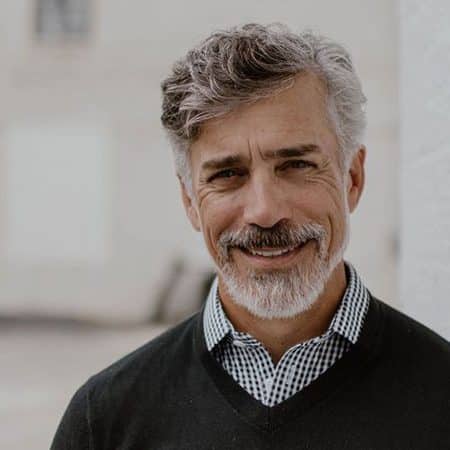
Mike Lerario is President and Principal Consultant for Crispian Consulting Inc., a firm that provides specialized training and coaching in Leadership Development and organizational effectiveness. Additionally, Mike serves as a subject matter expert on numerous research projects for the Army and the Department of Defense. A 1983 graduate of the United States Military Academy (West Point), Mike served 23 years as an Infantry Officer in Airborne Ranger assignments and retired as a Lieutenant Colonel in 2006 after serving with the Joint Special Operations Command.
Mike’s Army career includes command assignments through battalion level. He has
multiple combat tours in both Afghanistan and Iraq.
Following his retirement from active duty, Mike worked as an Operational Advisor with the
U.S. Army Asymmetric Warfare Group (AWG) and with NATO training “Attack the
Network” and Counterinsurgency (COIN) Operations. He returned to Afghanistan in 2013
to assist in the training and development of the Afghan National Army Special Operations
Command (ANASOC) and in 2014 to serve as Senior Command Advisor to the three-star
commanding general of all NATO operational forces in Afghanistan.
He holds a Bachelor of Science in Engineering (with a concentration in Military History)
and a Master of Art in Leadership Development, both degrees from the United States
Military Academy at West Point, NY.
Mike is the author of the 2016 Amazon.com International Best Seller Leadership in
Balance: The Fulcrum-Centric Plan for Emerging and High Potential Leaders. His second
book, Management in Balance: The Fulcrum-Centric Plan for New and Reluctant
Managers, was published in November 2022. He is currently working on a third book,
Solving the Leader’s Dilemma: Finding the Balance Between Leadership and
Management.
Mike hosts the Objective Arete Podcast and serves on the company’s Board of Advisors.
Contact: mike@objectivearete.com
Crispian Consulting: www.bethefulcrum.com
_______________________________________________
Check out our Social Media and The Objective Podcast! This Linktree goes to all of our outlets.
Sign up for our newsletter to get updates on our latest articles, podcast episodes, events, and more on our Homepage!
You can learn more about Objective Arete and our Team Here.
We seek writers who want to share stories, lessons learned, and opinions that can help others. If you would like to publish with us, please email Ayman@objectivearete.com.
Live With Purpose, Embrace Adversity, and Relentlessly
Buy Me A Coffee
If our words resonate, help us keep writing them.
The Arete Journal exists for those striving to grow—individuals committed to becoming stronger, wiser, and more impactful for their families, communities, and society. We don’t run ads in our journal. We don’t chase clicks. We rely entirely on the generosity of readers like you.
If our work has inspired you, challenged you, or helped you on your journey, consider supporting us. Every donation fuels the next insight, the next story, the next spark of growth.
Buy us a coffee (Small donation)—and help build a better future, one idea at a time.


Leave a Reply