
No MBA, No Ego, No Excuses: The Leadership of Terry Peters Part 2
“You aren’t that special. How hard are you willing to work toward your goals? That’s what sets you apart.” – Mike Longo, former CEO of Hibbett Sports.
This is part 2 of a three-part series. If you missed the first article, you can find it here:
You Aren’t That Special
“Many organizations are reluctant to hire retired high-ranking military people. Their perspective is that many of them (higher ranking leaders) don’t want to work hard anymore and often think they are God’s gift to an organization, and they don’t need or want that.” – Terry Peters.
Terry’s perspective struck a chord with me—especially as I recently completed The Honor Foundation (THF), a program designed to help transitioning Special Operations personnel continue to conquer their life after the military. An eye-opening exercise THF promotes is called “Cups of Coffee.” The idea is simple: have 50 candid conversations with professionals across industries to explore opportunities and expand your perspective. During my own Cups of Coffee journey, a tough but recurring truth emerged. Many executives and HR leaders shared a concern: they were hesitant to hire former Special Operations members. The reason? Some had developed a reputation for entitlement—expecting high salaries without demonstrating the humility or curiosity needed to thrive in unfamiliar environments. Instead of embracing the beginner’s mindset, they resisted starting at the bottom, often unaware that companies don’t care what you did yesterday; what matters is what you are bringing to the table for that company today. It was a surprising revelation—but one that made Terry’s insights all the more valuable.
Terry put it plainly: “Companies want people who are hungry to work, willing to put in the hours, and ready to earn their place. They’re not looking for someone who shows up with all the answers but someone eager to learn, to collaborate, and to tackle challenges as part of a team. What matters is your ability to grow, to adapt, and to create value. Out here, no one’s impressed by how special you think you are. It all comes down to one thing—humility.”
The reality is that none of us are as amazing or as terrible as we believe ourselves to be on any given day. As Terry explained in part one, your past deeds may grant you access to the runway, but if you aren’t bringing something to the table today, you’ll crash and burn before being fully airborne.
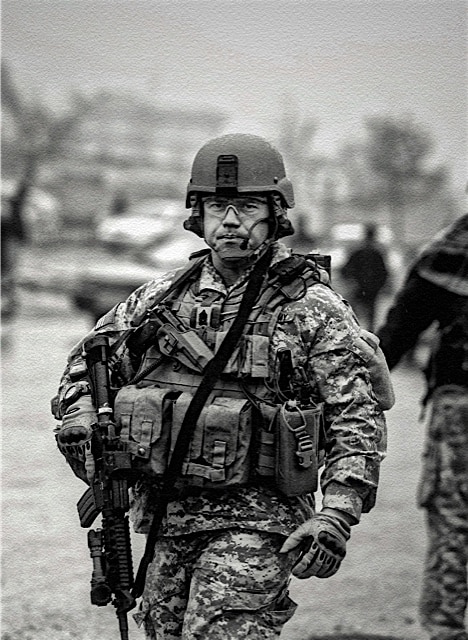
Embrace Adversity
“You obviously faced a ton of friction and adversity while in the Army. Has it been easier since you retired?” I asked.
Terry paused for a moment before saying, “Absolutely not. Even fourteen years into this business, I still find myself super stressed at times.” He paused and glanced upward before continuing with a recent story in which he withdrew himself from the business for a short time due to business stress.
“There were a few things happening with the business in 2023,” Terry said. “Financially, we plateaued—then started to dip. At the same time, friction was building beneath the surface.” He paused. “I’m usually clean-shaven, but I started growing a beard. In my experience, when someone who’s always been clean-shaven suddenly changes, it’s often a sign they’re wrestling with something deeper. I didn’t notice it at first. But one day, I sat down, took stock of my life, and realized I had withdrawn. I wasn’t showing up—not for my Chief of Staff, not for the team. I was being a bad business partner and a poor leader.” He looked down for a second, then added, “When things went well, I gave the team the credit. When things went wrong, I put it all on myself. That’s what leadership feels like sometimes. I was spiraling, and it was dragging me under. Eventually, I had to snap out of it. So I did the work, owned it, apologized to the LSDS team—and got back in the game.”
Terry shared several stories from LSDS’s early days—moments when things nearly unraveled. In one instance, a few key projects teetered on the edge of collapse because people acted in ways he never anticipated, costing the company serious money. “Do I really need to be that specific with my guidance?” he asked. “I don’t want to run a company where I have to micromanage every detail. These mistakes should’ve been avoided with basic common sense.” The consequences weren’t just financial—they were deeply personal. The stress was crushing, and the recovery was long and painful for LSDS, it took years to recover from some of these.
As I noted in Part 1, though, Terry and the LSDS team have a track record of turning setbacks into stepping stones. In fact, some of the company’s core operating principles were forged in the heat of those near disasters. They learned, adapted, and emerged stronger than before.
That mindset echoes one of my favorite principles: failure and defeat are not the same. Failure is part of growth. You can, and should, fail often—as long as you learn from it. If you see failure as a teacher, not a tombstone, you’ll never truly be defeated.
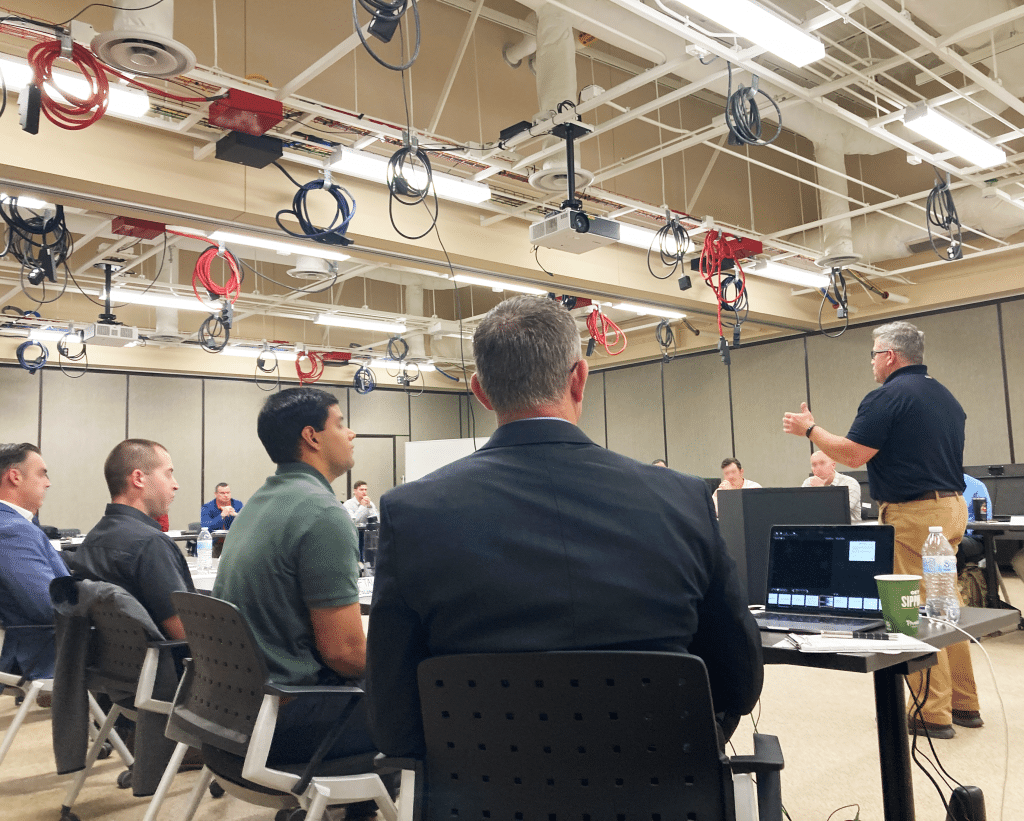
Terry Peters and LSDS
Invisible Friction
“What I don’t often see looking at businesses, or even the best military organizations from the outside, are all the things slowing down the momentum and chipping away at possible success. This is where leaders spend most of their time, and it’s usually invisible to most others, even those in the company. I refer to this as invisible friction.” – Terry Peters.
“What’s the primary cause of invisible friction?” I asked.
“Humans,” Terry said without hesitation. “You’ll find invisible friction in every organization run by people. One of the hardest things for me personally is when incredibly talented individuals—people I admire—end up letting me down. And I’m not talking about minor slip-ups. I mean major failures that cut deep. It’s rarely intentional, but it still stings. Even the best of us create friction.”
I asked how that affected him—if he took it personally.
“Always,” he said. “I carry it. If someone fails, I feel responsible. I start analyzing everything: Did I give enough guidance? Was I clear enough?” He paused, the weight of his words settling. “Sometimes, when someone extraordinary has to leave, it ends on good terms. But not always. I can think of five or six times when departures were aggressive and emotional. That’s just part of dealing with people.”
He leaned in, lowering his voice a bit. “That’s the invisible friction. The clients never see it. From the outside, things look smooth. The product is great. The company looks like it’s thriving. But inside, you’re dealing with stress, tension, and sometimes chaos. You’re holding the whole thing together while managing pressure that could break you—and most people will never know it.”
Terry made it clear that LSDS isn’t immune to the human dynamic just because they help other businesses navigate these same challenges. “No organization is immune to human tendencies and the friction that comes with it. The real question is: how do you learn from it?” he said. “You have to own it, study it, extract the lesson, and use it to level up personally and as an organization. That’s how you continue to move forward. You will find yourself with problems, with friction, with failures. What systems and habits do you build to deal with them?”
The invisible friction Terry talks about doesn’t just exist around him—it affects him, too. Because, at the end of the day, we’re all human. And humans are endlessly fallible. We create drama without realizing it. We operate from ego without seeing it. Just like someone who’s passive-aggressive but genuinely unaware of how they’re coming across, we often move through the world blind to the ripple effects of our own behavior. Our egos shield us from hard truths, acting as built-in defense mechanisms. Most of the time, it takes someone else—someone with the personal courage and compassion to speak up—for us to recognize where we’ve gone wrong. The truth is, we all generate invisible friction. It’s part of being human. Just as LSDS helps companies navigate and reduce internal tension, it, too, must wrestle with its own. And the same goes for each of us: no one is immune from becoming the friction point in someone else’s story. You must be humble enough to recognize it, take accountability for it, and learn from it. These words are obviously much easier to write than to put into practice in reality.
This concludes part two of our three-part series. In the final installment, we’ll dive into the heart of organizational culture, explore how Terry balances giving back to the community while also being able to protect his time and energy and take you behind the curtain for a deeper look at what drives the company forward. Stay tuned!
_________________________________________________________________

Terry Peters founded LSDS in 2011. As the Chief Executive Officer and leader of the Organizational Success programs, Terry has led LSDS to substantial yearly growth in all the company’s lines of effort. He spearheads leader development programs and executive coaching of leaders.
Prior to founding LSDS, Terry served as the General Manager of a large defense contractor, leading a 2000-person team. His 27 years in the US Army included four years in combat and deployment to dozens of countries while serving.
Terry Peters founded LSDS in 2011. As the Chief Executive Officer and leader of the Organizational Success programs, Terry has led LSDS to substantial yearly growth in all the company’s lines of effort. He spearheads leader development programs and executive coaching of leaders.
Prior to founding LSDS, Terry served as the General Manager of a large defense contractor, leading a 2000-person team. His 27 years in the US Army included four years in combat and deployment to dozens of countries while serving.
_________________________________________________________________
About the Author
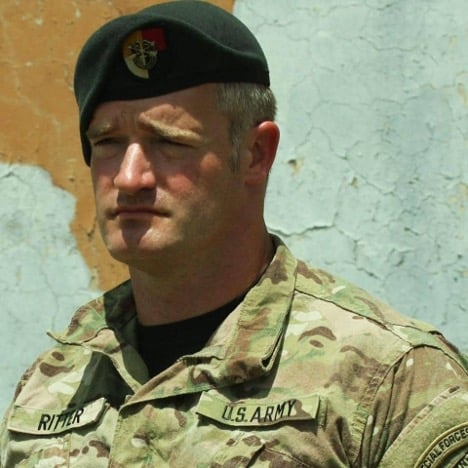
Chuck Ritter is a retiring Army Special Forces sergeant major stationed at Fort Bragg, NC. He will retire in June 2025. He is a co-founder of Objective Arete, LLC, a veteran-owned self-development company. Chuck previously co-hosted/produced the Pineland Underground Podcast and serves on the Board of Directors for the Dreams 4 All Foundation.
He has been awarded the Silver Star Medal, Bronze Star for Valor, Army Commendation Medal for Valor, three Purple Heart Medals, the Triple E Valor and Courage award, and most importantly, the NDSM and Air Assault Badge. He also awarded himself the Charles P. Ritter Award for being “pretty cool.”
He is attending Norwich University, completing a B.S. in Strategic Studies and Defense Analysis. He will continue a Master’s program in 2025.
_________________________________________________________________
Check out our Social Media and The Objective Podcast! This Linktree goes to all of our outlets.
Sign up for our newsletter to get updates on our latest articles, podcast episodes, events, and more on our Homepage!
You can learn more about Objective Arete and our Team Here.
We seek writers who want to share stories, lessons learned, and opinions that can help others. If you would like to publish with us, please email Ayman@objectivearete.com.
Live With Purpose, Embrace Adversity, and Relentlessly Pursue Excellence!
Buy Me A Coffee
If our words resonate, help us keep writing them.
The Arete Journal exists for those striving to grow—individuals committed to becoming stronger, wiser, and more impactful for their families, communities, and society. We don’t run ads in our journal. We don’t chase clicks. We rely entirely on the generosity of readers like you.
If our work has inspired you, challenged you, or helped you on your journey, consider supporting us. Every donation fuels the next insight, the next story, the next spark of growth.
Buy us a coffee (Small donation)—and help build a better future, one idea at a time.



Leave a Reply