
A lion doesn’t need to announce that it is a lion. It just is. The same goes for leadership. A leader does not necessarily need a title. When someone walks into a room, the energy they put off is enough.
In public service and the military, leadership is often misinterpreted as a title with authority. Sure, in those sectors, you have ranks and official designations. But what is leadership? To me, leadership, in its purest form, is an individual who decides to become responsible. Leadership transcends stars, bars, or stripes. Leadership all has to do with the individual’s character. Does the individual possess true, noble traits and be a person of character?
The answer to that question resides within individual character, influence, and the ability to inspire others, regardless of one’s formal position in a hierarchy.
At its core, leadership is about vision and direction. It’s the ability to see beyond the immediate and articulate a future others can rally around. Great leaders deeply understand their team’s strengths and weaknesses, facilitating an environment where everyone can thrive. This kind of leadership is not bestowed upon individuals through promotions or awards; it is earned through consistent actions, integrity, and respect.
True leaders are all around us and are often overlooked because they want to be in the thick of things, down in the dirt with their respective troops. That is, whether it is the military, police, fire, or EMS. I remember when I was first promoted to Sergeant in the Army. It was the end of the day, and my squad was sweeping the squad room and hallway. Another Sergeant approached me and saw that I was sweeping with the rest of the squad and said that I don’t have to do that anymore. I don’t remember what I said verbatim, but I pointed out that I lead by example.
While titles may grant temporary authority, true influence lies in the ability to connect with people. A leader without a formal title can shape the course of a project or initiative by fostering collaboration and encouraging input from team members. They inspire colleagues to contribute their ideas, leading to innovative solutions that might not emerge in a traditional top-down approach. This kind of influence creates a culture of empowerment where everyone feels valued and motivated to contribute.
Effective leadership is often a product of leading by example. Individuals who display resilience, empathy, and a strong work ethic inspire others to follow suit. Leaders who demonstrate accountability and transparency build trust and credibility within their teams. This connection often results in higher morale and increased productivity, proving that action can speak louder than a title.

Authority over Influence
Some leaders push their authority over influence. Those leaders are more of the authoritarian type. Authoritarian leadership is characterized by a directive approach where the leader makes decisions unilaterally and expects team members to follow orders without input. This style often prioritizes efficiency and control, with leaders valuing discipline and adherence to rules above all else. While it can lead to quick decision-making and clear guidance in specific contexts, the authoritarian approach produces more negative outcomes in team dynamics and overall organizational health.
One of the most significant drawbacks of authoritarian leadership is the stifling of creativity and innovation. A culture of conformity develops when team members are not encouraged to share their ideas or contribute to decision-making. Employees may feel discouraged from proposing new solutions or voicing diverse perspectives, leading to stagnation in progress and a lack of engagement. The absence of collaboration can result in missed opportunities for improvement as teams become trapped in a cycle of following directives without questioning or exploring alternatives. People are more inclined to obey out of fear than understanding.
Team members may be reluctant to express dissenting opinions or raise concerns due to fear of reprimand or negative consequences. This environment hampers open communication and creates a sense of distrust. Over time, this fear can negatively impact morale and motivation, leading to higher employee stress levels and burnout. Individuals may become disengaged and less invested in their work as the focus remains on obedience rather than personal growth or development.
In addition to stifling creativity and fostering fear, authoritarian leadership can increase turnover rates. Employees who feel undervalued or oppressed may become dissatisfied and seek opportunities in more open and supportive environments. High turnover disrupts team cohesion and incurs significant costs related to recruitment and training new staff. The constant churn can further damage team morale as remaining members grapple with losing colleagues and increased workload.
Lastly, authoritarian leadership undermines the potential for team development and empowerment. When leaders take complete control, they miss the chance to cultivate future leaders within their ranks. By not delegating responsibilities or empowering team members to make decisions, authoritarian leaders fail to develop essential skills and confidence in their staff. This lack of growth ultimately hampers the team’s overall effectiveness and resilience in adapting to change.
Authoritarian leadership may yield short-term benefits in specific contexts, its long-term adverse effects on team dynamics are profound. This leadership style creates a detrimental environment that can hinder individual and organizational success by stifling creativity, fostering a culture of fear, increasing turnover rates, and undermining employee empowerment. Organizations may benefit from exploring collaborative and inclusive leadership approaches to cultivate a healthier and more productive workplace.
Servant Leadership: Putting Others First
One powerful approach to leadership is the concept of servant leadership. This philosophy emphasizes that leaders exist primarily to serve others. Rather than seeking to control or dictate, servant leaders prioritize the needs of their team, striving to support their personal and professional growth. This foundational shift in perspective—viewing leadership as service—revolutionizes how teams function and thrive.
At its heart, servant leadership is built on several core principles that guide leaders in their interactions and decisions. One of the most critical principles is empathy. Servant leaders seek to understand others’ perspectives and emotions, engaging in active listening that ensures everyone feels heard and valued. This empathetic approach fosters a supportive environment where individuals feel safe to voice their thoughts and concerns.
Active listening is another essential skill for servant leaders. By engaging in meaningful conversations and genuinely hearing what team members say, leaders can discern underlying issues, gauge morale, and identify areas for improvement. This listening cultivates trust and generates a feedback loop that enhances collaboration, enabling the team to work together more effectively.
Servant leaders are committed to the development of their team members. They invest time and resources into mentoring, coaching, and training, helping individuals grow their skills and advance in their careers. This commitment enhances individual capabilities and strengthens the overall effectiveness of the team. Team members who feel supported in their development are more likely to take ownership of their roles and contribute actively to their collective success.
Servant leaders also focus on community building within their teams. By recognizing and celebrating individual contributions, these leaders create a cohesive group where members feel connected and committed to shared goals. This sense of community fosters collaboration and empowers individuals to work together, enhancing morale and productivity.
Servant leaders encourage a spirit of collaboration over competition. Promoting teamwork creates an atmosphere where members are encouraged to share ideas and work together towards common objectives. This collaborative spirit can lead to innovative solutions and a higher level of creativity, as team members feel empowered to contribute without the fear of judgment.
By practicing these principles, servant leaders build strong, trusting relationships that foster collaboration and resilience. Teams led by servant leaders exhibit higher morale, greater job satisfaction, and improved performance. When team members feel genuinely supported and valued, they are more likely to demonstrate commitment, take initiative, and overcome challenges together.
This approach enhances team dynamics and cultivates a sense of ownership and accountability among team members. As individuals grow in confidence and skill under servant leaders, they become more invested in the outcome of projects, which contributes to a culture of shared responsibility that benefits the entire organization.
In times of crisis or change, servant leaders are particularly effective. Their commitment to their team’s well-being helps navigate challenges with empathy and resilience, ensuring that individuals feel supported throughout difficult transitions.
Authentic leadership is not defined by titles or hierarchy but by an individual’s character and ability to influence and inspire others. Authentic leaders emerge from a foundation of integrity, vision, and service, prioritizing the growth and well-being of their team over authoritarian control.
While authoritarian leadership may offer short-lived efficiency, it ultimately suppresses creativity, engenders fear, and hampers team cohesion, leading to higher turnover and disengagement. In contrast, the principles of servant leadership—such as empathy, active listening, community building, and collaboration—foster an environment where individuals feel valued and empowered. By embracing a leadership style that focuses on serving others, leaders can cultivate resilient teams that thrive on trust, accountability, and a shared commitment to success. Authentic leadership lies not in the authority one wields. Still, one has a positive impact on the lives of others, creating a culture of growth and innovation that benefits the entire organization.
_________________________________________________________________
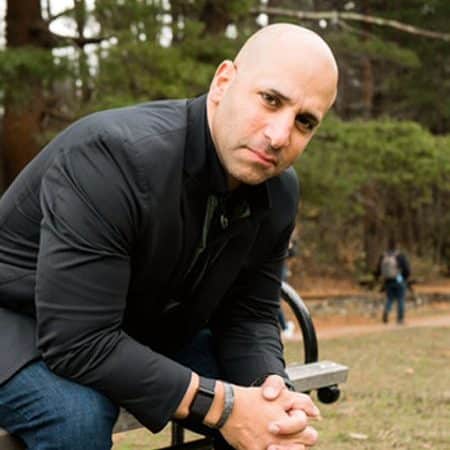
Ayman Kafel and his family survived civil wars in Africa and Lebanon before immigrating to the United States in 1988. Following the tragic events of September 11, 2001, Ayman enlisted in the Army and deployed to Iraq in 2005, where he conducted over 20,000 miles of combat patrols and military missions. His proficiency in Arabic allowed him to effectively coordinate and collaborate with various Army units.
In October 2007, Ayman began his law enforcement career as a police officer in the Commonwealth of Massachusetts, initially serving with the MBTA Transit Police Department. In 2011, he transferred to the Attleboro Police Department, where he has held multiple roles, including uniform patrol officer, detective, and DEA task force officer. He has also served as a DEA SRT Operator, assistant team leader, and Metro-SWAT Operator, and he remains an active member of the SWAT team.
Throughout his career, Ayman has led and participated in numerous complex investigations, successfully capturing and prosecuting high-level criminals. In November 2022, he was promoted to the rank of Sergeant and currently serves as a Patrol Division Sergeant on the day shift.Throughout his career, Ayman has led and participated in numerous complex investigations, successfully capturing and prosecuting high-level criminals. In November 2022, he was promoted to the rank of Sergeant and currently serves as a Patrol Division Sergeant on the day shift.
Ayman is a writer for The Havok Journal, where he has published over 100 articles covering topics such as law enforcement issues, his military experiences in Iraq, and the challenges of PTSD within the law enforcement community. His work has also appeared in The Epoch Times. Recently, he was featured on BBC Arabic to share his insights and experiences in Iraq.
Additionally, Ayman has published a book titled The Resolute Path and founded Project Sapient, a podcast, training, and consulting company.
Follow Project Sapient on Instagram, YouTube, and all podcast platforms for engaging content.
Contact: ayman@objectivearete.com
Project Sapient: https://projectsapient.com/
YouTube: https://www.youtube.com/channel/UC8cO-sLPMpfkrvnjcM8ukUQ
_________________________________________________________________
Check out our Social Media and The Objective Podcast! This Linktree goes to all of our outlets.
Sign up for our newsletter to get updates on our latest articles, podcast episodes, events, and more on our Homepage!
You can learn more about Objective Arete and our Team Here.
We seek writers who want to share stories, lessons learned, and opinions that can help others. If you would like to publish with us, please email Ayman@objectivearete.com.
Live With Purpose, Embrace Adversity, and Relentlessly Pursue Excellence!
Buy Me A Coffee
If our words resonate, help us keep writing them.
The Arete Journal exists for those striving to grow—individuals committed to becoming stronger, wiser, and more impactful for their families, communities, and society. We don’t run ads in our journal. We don’t chase clicks. We rely entirely on the generosity of readers like you.
If our work has inspired you, challenged you, or helped you on your journey, consider supporting us. Every donation fuels the next insight, the next story, the next spark of growth.
Buy us a coffee (Small donation)—and help build a better future, one idea at a time.




Leave a Reply