By Chad Brack
In August of 2023, I medically retired after twenty years of service in the United States Army Special Forces. Twenty-nine days later, I found myself gawking at trees in the middle of nowhere. After visiting family in Colorado, my wife and I headed to Estes Park for a few days, hoping to see some interesting wildlife, such as elk, moose, or bears. Birds had never crossed my mind, but she booked a birding tour on a whim and dragged me along for the ride.
“Birdwatching?” It sounded pretty lame, like something you would do at an old folks home. I pictured senior citizens sitting in lawn chairs staring at bird feeders. It was not that. Well, it could be that, but this time, it wasn’t.
Our guide, Ryan Dibala from Birding Man Adventures, took us on a trek through the mountains and encouraged us to use our eyes and ears to find and identify as many avian species as possible. We spent the morning surrounded by nature, being mindful of our environment, and using attention to detail to positively identify our targets. Birdwatching—the pros call it birding—was fun. Plus, we got plenty of exercise and fresh air while doing it.
That one experience turned us into birders. We were counting species on our own by the end of the day. We bought binoculars before we left Colorado, and we started birding every weekend as soon as we got home to San Diego. By March of the following year, we had upgraded our binoculars, bought a nice spotting scope, and created Bearded Birding social media pages to share pictures and videos of the birds and other wildlife we find during our adventures. In February of this year, we even traveled to Costa Rica with Ryan on a 10-day birding extravaganza through tropical jungles, cloud forests, mangroves, and other biomes, where our group of 8 logged 296 species of birds and saw an abundance of different animals.
Needless to say, I’m now a huge advocate of birding, birdwatching, or whatever you want to call it, as a wholesome hobby for people of all ages. I also think it’s especially appropriate for veterans. Here are some reasons why:
(1) Military experience is surprisingly relevant.

People in the military, especially those of us who went to sniper school, joke about being “trained observers.” As funny as that sounds, it’s true. I’ve found that my military experience really does apply to birding. Being successful requires situational awareness, attention to detail, and a good eye. I occasionally conduct SLLS (stop, look, listen, and smell), although I haven’t identified any birds by smell yet. I do, however, know all too well what the Tijuana River Valley smells like.
Birding is an outdoor event, or should be, so land navigation and other types of fieldcraft can sometimes come into play, especially if you get very adventurous. I continually find myself reminiscing about being in training or downrange while we’re out exploring new areas. It’s a fun and engaging way to appreciate the skills I learned in the Army, particularly when journeying into the wilderness to find an elusive bird hiding amongst the never-ending supply of Acorn Woodpeckers. It keeps my skills sharp, too. I’m unquestionably more observant and less lackadaisical than I used to be.
(2) Spending time in nature is great for your mental and physical well-being.
Fresh air and exercise are common prescriptions for stress relief and a healthy lifestyle. Birding gets you both. In fact, birding requires both unless you’re mouth breathing in your living room while staring out the window. Since we’ve become avid birders, my wife and I have drastically increased our time outdoors. Instead of sitting around the house watching Josh Gates on TV, we go for walks or hikes looking for birds. I can honestly say I’m much happier when I spend that much time in nature, and she is too. Being outside really does improve mental health. There’s just something about the natural environment that has a calming effect. Recent studies show that simply viewing nature can positively affect mood and self-esteem as well as regulate the sympathetic nervous system. The physical exercise doesn’t hurt either.
Birding requires paying close attention to your environment, necessitating slowing down and being mindful of what’s happening around you. It’s not the same as jogging in the park while listening to music or constantly running your mouth with friends during a group outing. Sure, you’re on a mission, but you also need to slow down, be quiet, and be mindful of the world around you, which is hugely beneficial to your mental health and overall well-being. This awareness encourages respect and appreciation for nature and often catalyzes healthy reflection on your place within it. In short, birding encourages you to truly perceive the natural world rather than just being outside.
(3) It’s not boring.
Within my first hour of birding, I likened the experience to a treasure hunt because you never know what you’ll discover. You’ll likely have a good idea of what to reasonably expect in any particular area, but you certainly can’t predict what you’ll actually find. Sometimes you see the species you anticipate, and sometimes you don’t. Sometimes, you spot birds that are less frequently seen or even one that “shouldn’t” be there, and there’s always the chance of finding other types of animals, too. We’ve encountered all kinds of creatures, from bears, badgers, and bobcats to lizards, snakes, and fascinating insects. Every time you go birding, there’s a real possibility of experiencing something new or unexpected … like some creepy homeless guy laughing maniacally in the woods just off the trail.
(4) The more you do it, the better you get.
When we first started, we thought everything was a sparrow. Before long, we were easily distinguishing between different kinds of birds, like sparrows, juncos, finches, and warblers. Now, it’s second nature to instantly recognize the various species within those categories, such as Song Sparrows vs. White-crowned Sparrows, House Finches vs. Purple Finches, or Orange-crowned Warblers vs. Yellow-rumped Warblers. We’ve also improved substantially at recognizing specific birds by ear. A few years ago, I could only identify a few birds by their calls. Today, I can walk any path in my area and confidently pinpoint the most common species by their sounds alone.
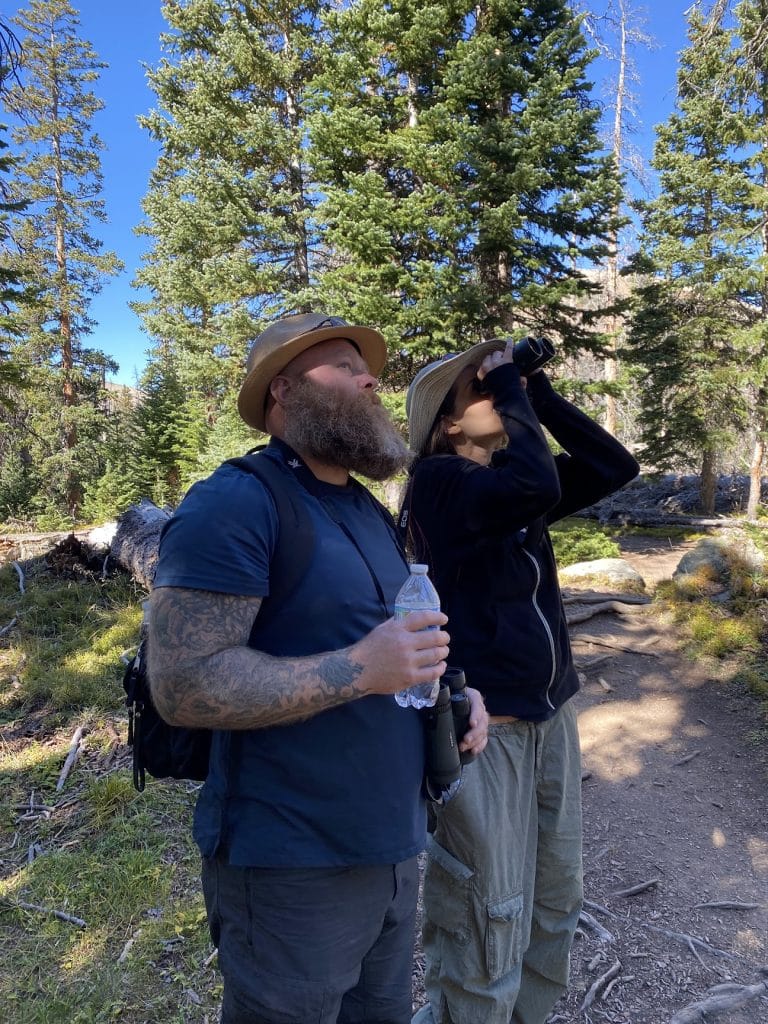
Although our skills keep improving, we’re continually challenged and learning new things. It’s not always easy to locate or identify a specific bird, especially when traveling to unfamiliar habitats or looking for a species you haven’t seen before. Success often requires researching a target’s characteristics, sounds, behaviors, and preferences. Birding doesn’t necessarily require you to become an expert, but consistency tends to make you one.
(5) Birding can enhance your relationship(s) and/or sense of community.

The astute reader most likely noticed that I keep using the pronoun we. That’s because my wife and I are almost always together when birding. It’s a shared hobby that we’re both passionate about, and it has most definitely improved our relationship due to the increased quality time we spend together pursuing the common interest. We’ve also made friends from the local birding community. When you start chasing certain species in your area, you start running into the same people and acquiring friendships along the way. Plus, many cities have local chapters of the National Audubon Society, which tend to host events such as birding meetups, guided walks (sometimes at otherwise restricted sites), and annual festivals. Most of these organizations have volunteering opportunities as well.
There are also numerous groups on social media dedicated to helping people identify birds, talk about local hotspots, or post pictures. The bottom line is that the birding community consists of like-minded enthusiasts who are almost always friendly, engaging, and eager to help, so it’s easy to make friends and become involved if you’re so inclined.
(6) It’s easy to get started.
Birds are everywhere. All you really have to do is go outside and pay attention. You can most definitely be successful in nothing but your ranger panties, but a couple of tools will exponentially amplify that success. The first is a decent set of binoculars (most birders prefer 8×42 or 10×42), which will make identifying birds much, much easier. If you want to take things to another level, a spotting scope and tripod will vastly increase your range, but they are absolutely not necessary for a great birding experience.
Second, I highly suggest using the Merlin app on your phone to help you determine what you see and hear. Merlin is free software from Cornell Lab of Ornithology and is packed with features to make you a better birder. It can identify birds by sound or photo; it has a step-by-step identification tool that considers size, color, and behavior; and it allows you to explore a vast database of birds with pictures, sound banks, and detailed descriptions that can even be sorted by the most likely birds found at your location. eBird is another free app from Cornell Lab that allows you to log all the species you find during each outing and maintains a running life list of every species you’ve ever seen. It also lets you explore local hotspots to see other people’s checklists and determine where to find any specific birds you want to see. Finally, you can sign up for “needs” and “rare bird” alerts to receive daily email rollups with links to eBird checklists and Google Maps pins where those target species were last seen.
(7) You might get inspired.
A few years ago, I certainly couldn’t have predicted that I would have social media pages dedicated to birding, but here I am. Shortly after buying my scope, I decided to try digiscoping and found that I could get excellent videos using my phone with an adapter (I prefer ScopeCam). Eventually, I bought a camera and telephoto lens to take my wildlife photography to the next level. It’s not uncommon for birders to get the photography itch, but sometimes people also discover other artistic interests as well, such as drawing or painting the birds they find or writing about their outdoor adventures. Pursuing these other avenues of expression can lead to building or expanding additional skills in conjunction with what you get from birding alone.
(8) Birding supports conservation efforts.
Submitting your checklists on eBird contributes to scientific data collection to help researchers keep track of bird populations and better understand migration patterns. Sometimes, visiting hotspots can also assist with funding local, state, and national parks. Audubon Societies and other groups also routinely host fundraisers and birding events to raise money that directly supports wildlife conservation. There are many ways to help, but just going out and logging what you find contributes to a good cause.
In sum, the last year or so has taught me that birding’s not just for old fogies. It’s an exciting, challenging, and rewarding hobby that benefits the mind, body, and soul as well as the environment. It can enhance or create relationships and is simply a good excuse to get off the couch. My wife and I have enjoyed a lot of good times and learned a ton in our first couple of years as birders. It has inspired us to get out more, to be adventurous, and to do things we wouldn’t have thought to do otherwise. We’re constantly finding new places and discovering new birds to see. We’re also excited for the next step in our journey: moving to the country in Oklahoma this summer to set up some nice lawn chairs in our big backyard and stare at the bird feeders.
___________________________________________________________

Chad Brack is a retired Army Special Forces master sergeant who spent his entire military career flip-flopping between the 3rd Special Forces Group (Airborne) and the US Army John F. Kennedy Special Warfare Center and School. Some of his awards include the Silver Star, the Bronze Star Medal, the Purple Heart, the Legion of Merit, the Defense Meritorious Service Medal, and the Army Service Ribbon.
Chad holds a B.S. degree in International Business from Oklahoma State University, a B.A. degree in Philosophy from Arizona State University, a B.A degree in Religious Studies from Arizona State University, and an M.A. degree in Strategic Security Studies from National Defense University.
He is currently unemployed and unmonetized.
Chad goes by the nickname Brackforce. You can listen to the story of how he was awarded the Silver Star for Valor in Combat on this episode of the Pineland Underground Podcast – Brackforce #1 | I Thought I Killed Bin Laden and the Dangers of Misusing Myself.
Links:
2. Bearded Birding Instagram, Facebook and YouTube
3. The effects of views of nature on autonomic control
5. Merlin App
7. eBird
9. San Diego Bird Alliance Birdathon
____________________________________________________________
Check out our Social Media and The Objective Podcast! This Linktree goes to all of our outlets.
Sign up for our newsletter to get updates on our latest articles, podcast episodes, events, and more on our Homepage!
You can learn more about Objective Arete and our Team Here.
We seek writers who want to share stories, lessons learned, and opinions that can help others. If you would like to publish with us, please email Ayman@objectivearete.com.
Live With Purpose, Embrace Adversity, and Relentlessly Pursue Excellence!
Buy Me A Coffee
If our words resonate, help us keep writing them.
The Arete Journal exists for those striving to grow—individuals committed to becoming stronger, wiser, and more impactful for their families, communities, and society. We don’t run ads in our journal. We don’t chase clicks. We rely entirely on the generosity of readers like you.
If our work has inspired you, challenged you, or helped you on your journey, consider supporting us. Every donation fuels the next insight, the next story, the next spark of growth.
Buy us a coffee (Small donation)—and help build a better future, one idea at a time.




Leave a Reply