
Several years ago, I had a conversation with my mother-in-law that led us to explore a question: What motivates some individuals to sacrifice their lives for the well-being of others? As we discussed this topic further, we spoke about the essence of public service and the unwavering commitment that drives people to step into demanding roles. This introspection took me on a journey through my life experiences — from serving in the Army and fighting in Iraq to transitioning into a career as a police officer. A common dedication to something greater than myself shaped each step.
As our conversation deepened, my mother-in-law stated, “People like you are burden-bearers.” Her words struck a chord, inviting me to think on the weight of this responsibility. That phrase captured the essence of a calling beyond personal ambition—a calling rooted in the desire to uplift and support others, often in the face of adversity. This has been ingrained in me since I was a kid. I often wonder if it was because I saw the destruction of civil war as a kid. Or is it something deeper?
My first exploration of the phrase “burden-bearer” is to define it. I believe a “burden bearer” is an individual who takes on the weight of others’ struggles, challenges, and emotional pain, often serving as a source of support and strength. This concept encompasses both the physical and emotional dimensions of responsibility, highlighting the willingness of certain individuals to share in the difficulties others face. Burden bearers are typically characterized by their compassion, empathy, and selflessness, often putting the needs of others before their own.
In various contexts, burden-bearers can take on different forms:
- Family Members: Parents, siblings, or spouses may assume roles as burden-bearers when they provide emotional support, care for loved ones during times of crisis, or manage household responsibilities during difficult times.
- Community Leaders: Those involved in social work, counseling, or community service often act as burden-bearers by advocating for individuals facing hardship, providing resources, or directly assisting those in need.
- Professionals in Caring Roles: Nurses, doctors, and first responders often embody the role of burden bearers as they help individuals navigate physical and emotional challenges, sometimes risking their well-being to provide necessary care and support.
- Friends: A true friend who listens and offers support during tough times exemplifies the role of a burden-bearer, sharing the emotional load to lighten the load for others.
The role of a burden-bearer can also carry significant emotional and psychological weight. It often requires managing one’s emotions while helping others, which may lead to compassion fatigue or burnout.
Burden-bearers are often celebrated for their selflessness and dedication to helping others, and it is crucial to recognize the toll that this role can exact on their well-being. Carrying the emotional and physical burdens of others often leads to a heavy weight that can fracture the very essence of those who step into this role. As they prioritize the needs of others, burden-bearers may find themselves engulfed in the struggles and heartbreaks of those they serve, which can result in exhaustion, isolation, and even a sense of losing their identity. Constantly giving of themselves without adequate replenishment can lead to a condition known as compassion fatigue, where the emotional reservoirs that once fueled their commitment to serve become depleted, leaving them feeling worn and vulnerable.

The paradox of being a burden-bearer lies in the conflicting emotions that arise from the impulse to help and the personal sacrifices that come with it. Many who take on this role feel an innate obligation to be strong for others, often viewing vulnerability as a weakness. This mindset can cause them to neglect their emotional needs and well-being, leading to a façade of strength that belies their internal struggles. This self-sacrifice, though noble, can create a sense of fragmentation within themselves. They may grapple with feelings of inadequacy and guilt, particularly when their efforts seem insufficient to mend the wounds of those they care for. The impact of this internal conflict can manifest in various ways. For example, I’ll give you all a personal story.
This isolation can lead to a cycle of pain, where the very individuals who strive to uplift and carry others’ burdens become trapped in their unprocessed grief and emotional turmoil. Consequently, their well-intentioned efforts may inadvertently transform into sources of distress, contributing to a fractured sense of self that is difficult to reconcile.
Burden-bearers need to recognize that nurturing themselves is not merely a personal necessity but also a crucial element in sustaining their ability to support others effectively. Acknowledging their vulnerabilities, seeking support, and engaging in self-care practices can help repair the fractures within their souls. By doing so, they can reclaim their sense of identity, resilience, and purpose—transforming their experience from silent suffering into a path of healing that empowers themselves and those they strive to help. In understanding the duality of being a burden-bearer—both the privilege of service and the struggle of carrying the weight of others—they can embark on a journey toward balance, ensuring that their commitment to their well-being matches their capacity for compassion.
_________________________________________________________________
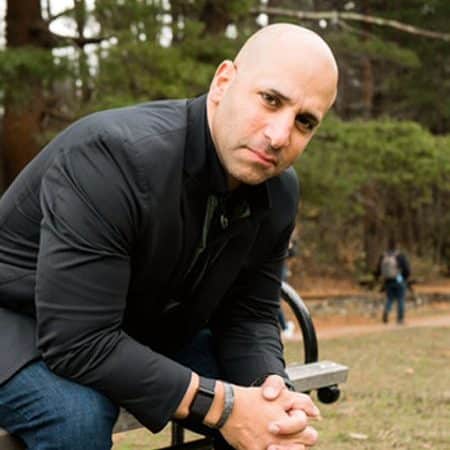
Ayman Kafel and his family survived civil wars in Africa and Lebanon before immigrating to the United States in 1988. Following the tragic events of September 11, 2001, Ayman enlisted in the Army and deployed to Iraq in 2005, where he conducted over 20,000 miles of combat patrols and military missions. His proficiency in Arabic allowed him to effectively coordinate and collaborate with various Army units.
In October 2007, Ayman began his law enforcement career as a police officer in the Commonwealth of Massachusetts, initially serving with the MBTA Transit Police Department. In 2011, he transferred to the Attleboro Police Department, where he has held multiple roles, including uniform patrol officer, detective, and DEA task force officer. He has also served as a DEA SRT Operator, assistant team leader, and Metro-SWAT Operator, and he remains an active member of the SWAT team.
Throughout his career, Ayman has led and participated in numerous complex investigations, successfully capturing and prosecuting high-level criminals. In November 2022, he was promoted to the rank of Sergeant and currently serves as a Patrol Division Sergeant on the day shift.Throughout his career, Ayman has led and participated in numerous complex investigations, successfully capturing and prosecuting high-level criminals. In November 2022, he was promoted to the rank of Sergeant and currently serves as a Patrol Division Sergeant on the day shift.
Ayman is a writer for The Havok Journal, where he has published over 100 articles covering topics such as law enforcement issues, his military experiences in Iraq, and the challenges of PTSD within the law enforcement community. His work has also appeared in The Epoch Times. Recently, he was featured on BBC Arabic to share his insights and experiences in Iraq.
Additionally, Ayman has published a book titled The Resolute Path and founded Project Sapient, a podcast, training, and consulting company.
Follow Project Sapient on Instagram, YouTube, and all podcast platforms for engaging content.
Contact: ayman@objectivearete.com
Project Sapient: https://projectsapient.com/
YouTube: https://www.youtube.com/channel/UC8cO-sLPMpfkrvnjcM8ukUQ
_________________________________________________________________
Check out our Social Media and The Objective Podcast! This Linktree goes to all of our outlets.
Sign up for our newsletter to get updates on our latest articles, podcast episodes, events, and more on our Homepage!
You can learn more about Objective Arete and our Team Here.
We seek writers who want to share stories, lessons learned, and opinions that can help others. If you would like to publish with us, please email Ayman@objectivearete.com.
Live With Purpose, Embrace Adversity, and Relentlessly Pursue Excellence!
Buy Me A Coffee
If our words resonate, help us keep writing them.
The Arete Journal exists for those striving to grow—individuals committed to becoming stronger, wiser, and more impactful for their families, communities, and society. We don’t run ads in our journal. We don’t chase clicks. We rely entirely on the generosity of readers like you.
If our work has inspired you, challenged you, or helped you on your journey, consider supporting us. Every donation fuels the next insight, the next story, the next spark of growth.
Buy us a coffee (Small donation)—and help build a better future, one idea at a time.

Leave a Reply